ServicesWalkways and Sidewalks
Walkways and Sidewalks in Laguna Hills
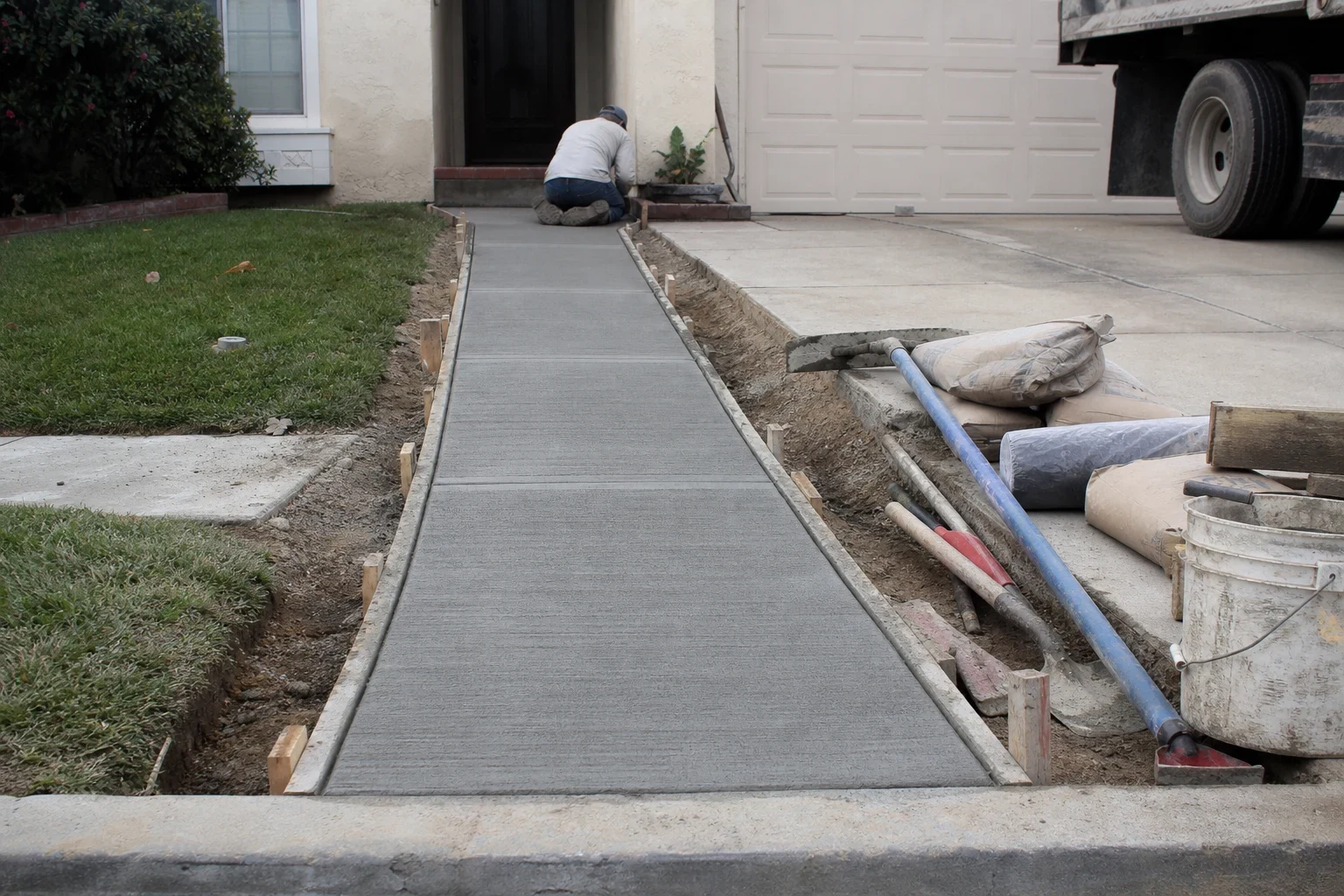
We pour new concrete walkways and sidewalks that sit level, shed water away from your home and feel solid underfoot. We tear out the old path, build a firm base, set straight forms and finish the surface so it grips when it is wet. You know the plan before we start.
A path you stop thinking about
A good walkway is one nobody notices. No lip to catch a toe, no puddle at the front step, no slab tipping toward the house. That comes down to the base, the slope and where the joints go, not how fancy the surface looks.
We build front entry walks, paths from the driveway to the door, garden paths and the strip of sidewalk along the curb. We treat the job the way we would want a neighbor to treat ours: we explain what we plan to do, protect your plants and siding, and leave the yard clean.
Clay soil is common around Laguna Hills, and it swells in a wet winter and shrinks in a dry summer. We plan the base for that so the new path stays where we put it.
What the work includes
Removal and haul-away
We break out the old concrete, pavers or gravel and haul it off. Your yard does not end up with a pile of rubble in the corner.
Compacted base
We dig to the right depth, take out soft or organic soil and compact a layer of base rock. Most walkway trouble starts underneath, so this is where we spend the time.
Forms, slope and steel
Forms are set to a string line with a gentle cross slope so rain runs off to the side, never toward your foundation. We add reinforcement where the ground or the layout calls for it.
Control joints and finish
We cut joints at planned spacing so the slab has a place to crack in a straight line instead of a random one. The surface gets a broom finish for grip, or a different texture if you want it to match something else.
Cleanup and walk-through
We pull the forms, backfill the edges and rake the soil back against the new path. Then we walk it with you and go over curing.
Signs it is time for a new walkway
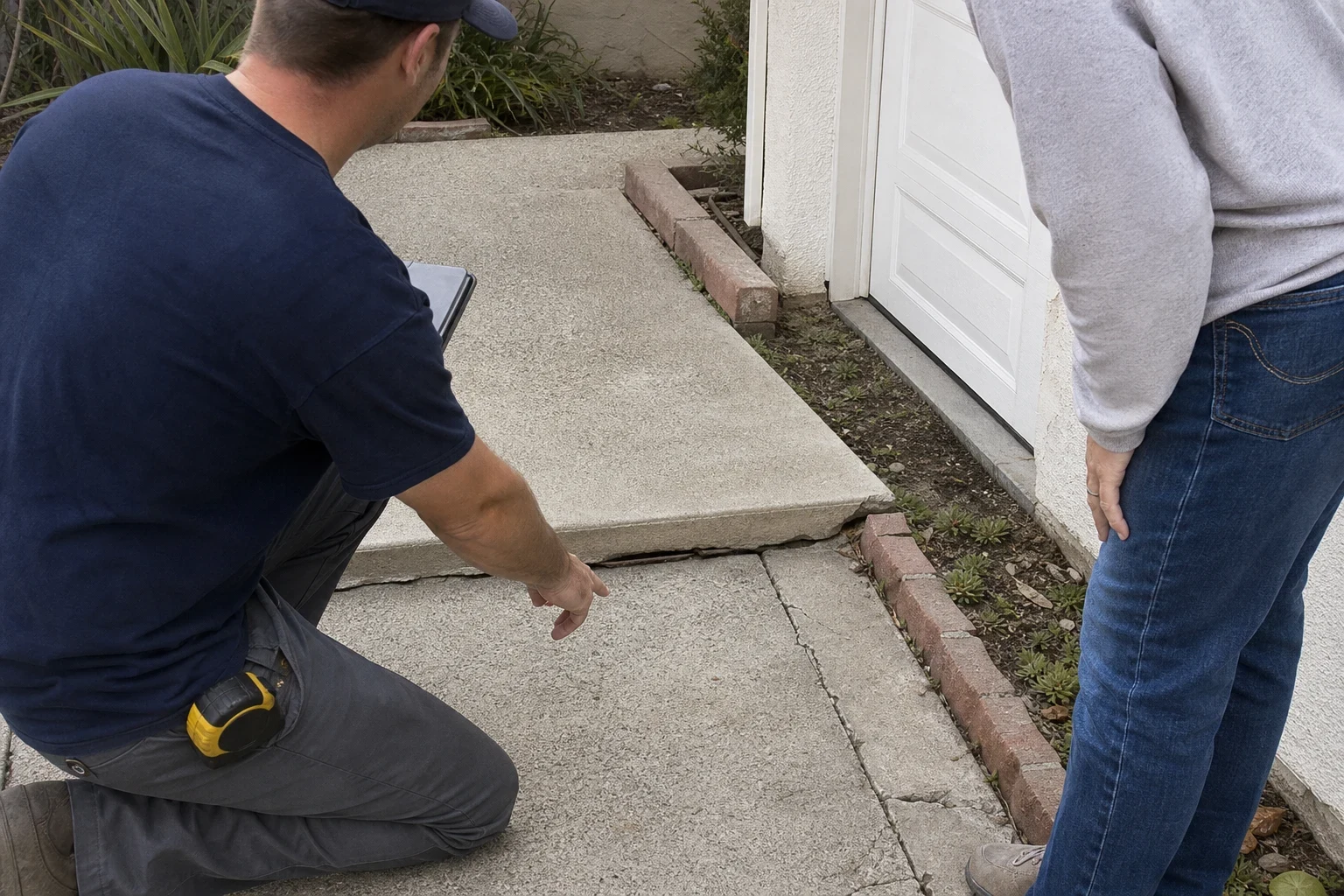
- Raised or sunken sections
- When one slab sits higher than the next, it is a trip waiting to happen. Guests and kids find that edge first.
- Water that pools or runs toward the house
- A path that holds water after rain or slopes back at your foundation was set wrong or has settled. A new one can be pitched the right way.
- Wide cracks and crumbling edges
- Hairline cracks are normal. Wide, spreading cracks and broken edges usually mean the base has failed, and patching the top will not fix that.
- Tree roots pushing up the slab
- Roots can lift a walk an inch or more. We can reroute the path, cut and remove the root where it is safe, or thicken the slab nearby.
- A path that does not go where people walk
- If everyone cuts across the lawn, the walk is in the wrong spot. Replacing it is a good time to move it or widen it.
How a walkway job runs
- 1
Look and measure
We come out, measure the run, check the slope and look at the soil and any roots. We talk about width, layout and finish, and you get a clear written estimate.
- 2
Permits and layout
If the work touches the public sidewalk along the street, the city usually requires a permit, and we pull it. We mark the new layout on site so you can see it before anything is torn out.
- 3
Demo and base day
We remove the old path, dig, and compact the base. Plants and nearby surfaces get covered.
- 4
Pour and finish
Concrete goes in, gets screeded flat, edged and finished. Joints are tooled or saw cut the same day or the next.
- 5
Cure and cleanup
We strip the forms, clean up and walk you through how long to stay off it. We keep the front door usable or plan another route with you so you are not stuck.
What moves the price
Every walkway is priced from its own measurements and site. The square footage matters, but so do the ground under it and how hard it is to get to. We break the estimate into line items so you can see where the money goes.
- Length, width and shape
- A straight four-foot walk costs less to form than one with curves, landings or step-downs. Wider paths use more concrete but often take about the same labor to set up.
- What comes out first
- Thick old concrete, roots or buried debris take more time to remove and haul. A bare dirt path is simpler.
- Soil and base work
- Soft or expansive soil may need deeper digging and more base rock. That is money well spent, since it is what keeps the path flat.
- Finish and color
- A broom finish is the most direct. Color, exposed aggregate or a pattern from our stamped concrete work adds steps and cost.
- Access and permits
- A walk we can reach with a truck pours faster than one in a backyard where concrete has to be wheeled in. Street sidewalk work adds a permit and inspection.
Walkway and sidewalk questions
- How soon can we walk on the new path?
- Light foot traffic is usually fine after a day or two. Keep heavy things like wheelbarrows and furniture dollies off for about a week. We will tell you what fits the weather on your pour day.
- How wide should a front walkway be?
- For most front entries, four feet lets two people walk side by side. Garden paths can be narrower. We will look at your door, your steps and how you use the space before we suggest a width.
- Will my new walkway crack?
- Concrete shrinks as it cures, so small cracks can happen. Control joints give those cracks a straight place to form, and a solid base keeps sections from shifting. That is why we put the work into both.
- Can you match my driveway or connect to my steps?
- Yes. We can match the finish of your driveway and tie the path into new concrete steps and stairs at the door. Color matching to old concrete is never exact, so we will show you what to expect.
- Can you run the path down the side of the house too?
- We can. A side path often pairs well with our concrete side yards work, so trash cans and garden tools move on solid ground. We plan the drainage so water still gets away from the house.
Ready for a walkway that stays flat
Tell us where the path runs and what bugs you about the one you have now. We will set a time to come look and measure.