ServicesRV Parking Pads
Concrete RV Parking Pads in Laguna Hills
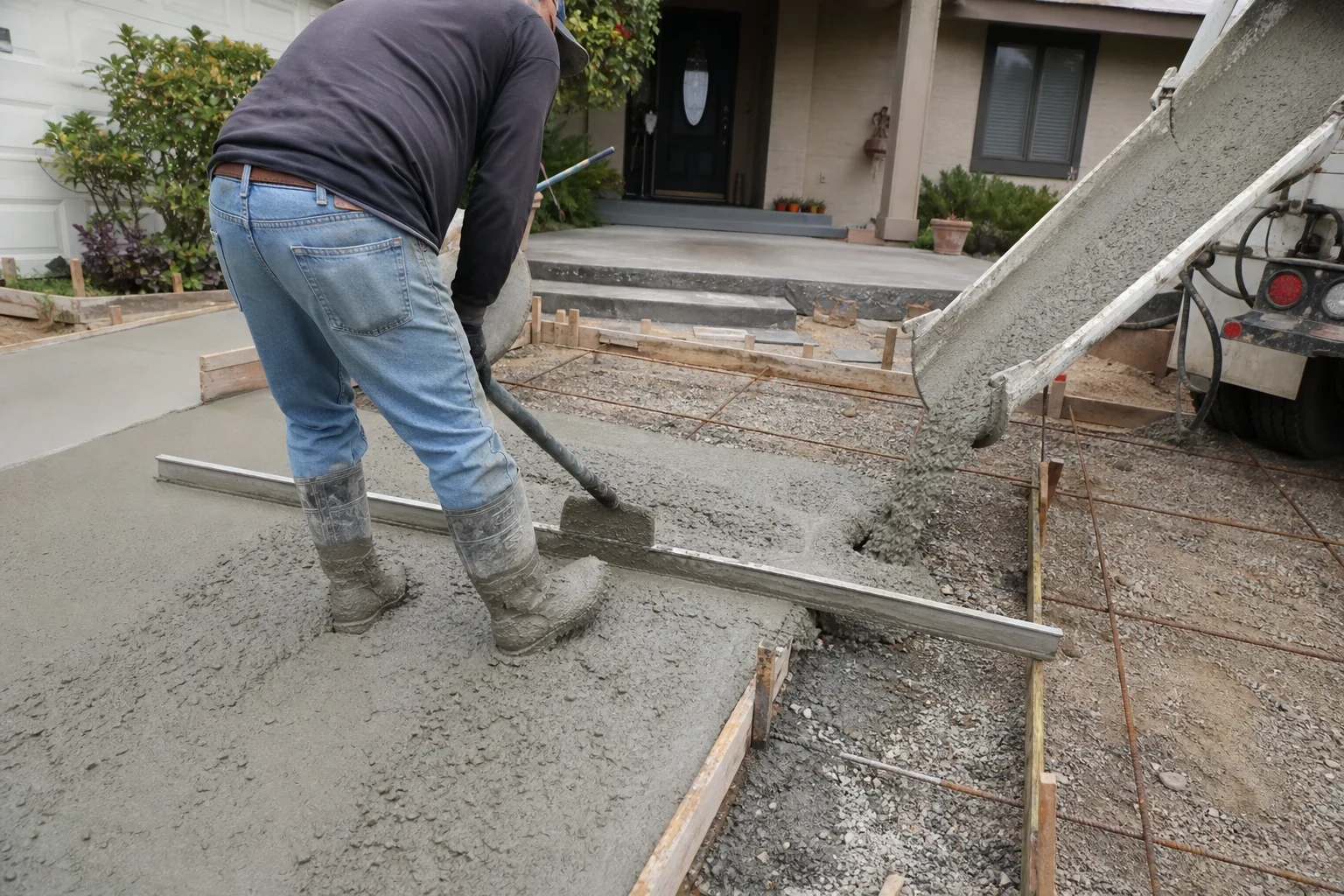
We pour RV pads thicker than a standard driveway, over a compacted base with steel inside. Your motorhome, trailer or boat gets a flat, solid spot that drains, stays put under the weight and keeps the side yard clean.
A pad that holds the weight
An RV is not a car. A loaded motorhome or fifth wheel can weigh several times what your sedan does, and most of that load sits on a few small tire patches and leveling jacks. A thin slab or a bed of gravel can't handle that for long. You get ruts, sunken corners and an RV that never sits level.
We build the pad for the rig you actually own. That usually means a thicker slab than your driveway, a well-compacted base and a rebar grid tied together before the pour. We also plan the slope so water runs away from your home and off the slab.
If the pad ties into an existing drive, we can talk about that too. Our Driveways and Concrete Side Yards pages cover those jobs on their own.
What goes into the job
- 01
Layout sized to your rig
We measure your RV and mark out room for slide-outs, the entry door and a walkway around it. You see the footprint on the ground before we dig.
- 02
Digging and base prep
We remove sod, roots and soft soil, then bring in base rock and compact it in layers. Much of the soil around here is clay that swells when wet and shrinks when dry, so this step matters most.
- 03
Thicker slab with steel
The slab is poured thicker than a typical car driveway, with rebar set on chairs so it sits in the middle of the concrete, not on the dirt.
- 04
Slope and control joints
We give the pad a gentle fall for drainage and cut joints at planned spacing. Concrete will crack a little as it cures. Joints tell it where.
- 05
Sleeves for later
If you may want power or water at the pad someday, we can set an empty pipe sleeve under the slab. Your electrician or plumber runs lines through it later without cutting concrete.
- 06
Cleanup
We haul off the dirt and forms, rinse the street in front of your home and leave the site broom clean.
Questions about RV Parking Pads?
Call(949) 386-2816Signs it's time for a real RV pad
The gravel keeps moving
Tires push gravel aside and dig in. You rake it back every few months and the low spots come right back.
Dead grass and ruts
Parking on lawn kills the grass and leaves tire tracks that hold water after rain.
The RV won't sit level
You stack blocks under the jacks every time you park. A flat slab makes leveling quick.
Weeds and mud under the rig
Weeds grow up into the undercarriage and mud gets tracked inside. Concrete ends both problems.
An old slab is sinking
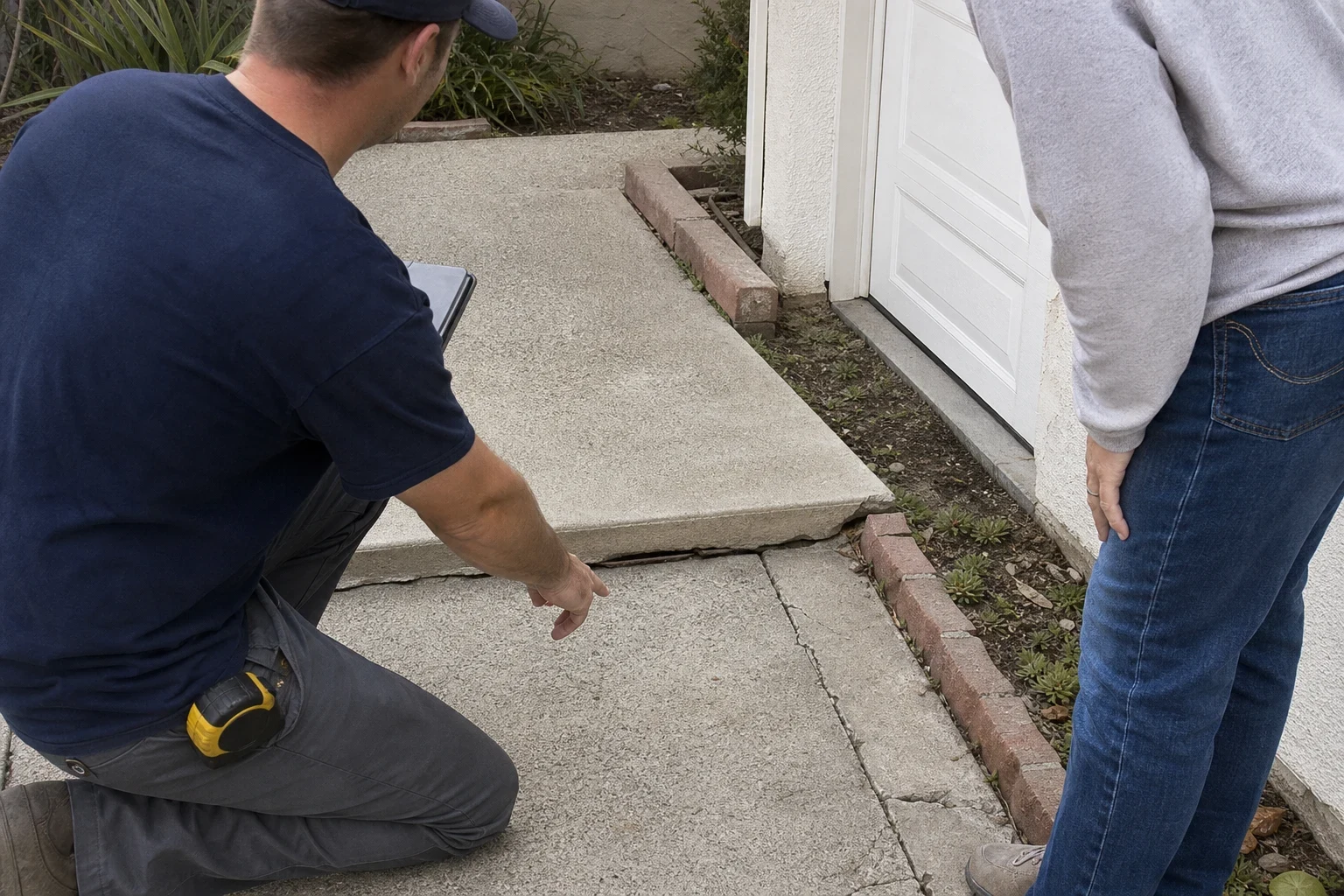
A thin pad poured for a car is cracking into chunks or dropping at one corner. Usually it's time to tear it out and pour one built for the load.
How the work goes
- 1
Phone call and site visit
You tell us about your RV and where you want it. We come out, look at access, soil, slope and drainage, and measure.
- 2
Written estimate
You get a line-by-line estimate showing thickness, steel, base, size and any demolition. If a curb cut or new driveway approach is needed, we tell you about the city permit up front.
- 3
Dig, base and forms
We excavate, compact the base, set forms and tie the rebar. We keep the truck and equipment off your neighbors' yards and out of their driveways.
- 4
Pour and finish
The concrete goes in, gets leveled and gets a broom finish for grip. Joints are cut and the edges are tooled clean.
- 5
Cure, then park
You can walk on it the next day and drive a car on it in about a week. We ask you to wait around four weeks before parking the RV so the slab reaches full strength.
What sets the price of an RV pad
Every pad is different, so we price it after we see the site. The biggest factors are size, thickness and what we find underneath. Your estimate lists each one so nothing shows up later.
- Size of the pad
- A trailer spot and a 40-foot motorhome spot with slide-out room are very different amounts of concrete.
- Thickness and steel
- Heavier rigs call for a thicker slab and more rebar. We size both to your RV, not to a one-size spec.
- Soil and base work
- Soft or expansive clay may need deeper digging and more base rock before we pour.
- Access and tear-out
- A narrow side gate or a slope means more hand work. Removing an old slab or gravel adds hauling.
- Permits and curb work
- A new curb cut or driveway approach usually needs a city permit and inspection, which adds time and cost.
RV pad questions
How thick should an RV pad be?
Thicker than a regular driveway, and how much depends on what you park. A light travel trailer needs less than a loaded Class A motorhome. We ask for your rig's weight and set the thickness and steel to match.
Do I need a permit for an RV pad?
A pad inside your property line often doesn't, but a new curb cut or driveway approach usually does. Your HOA may also have rules on where RVs can park. We check what applies to your lot and tell you before work starts.
How wide should it be?
Wide enough for the RV with slide-outs open plus room to walk around it. We usually add a couple of feet on the door side so you can unload without stepping in the dirt.
Can you put it in my side yard?
Often, yes. Gate width and how close the house sits to the fence decide how the truck gets in. If the side yard is tight, we may need a pump or extra hand work, and we'll say so in the estimate.
Will the concrete crack?
Some fine cracking is normal as concrete cures. Good base prep, steel and planned control joints keep cracks small and in the joints, where they don't affect the pad.
Ready to get the RV off the dirt?
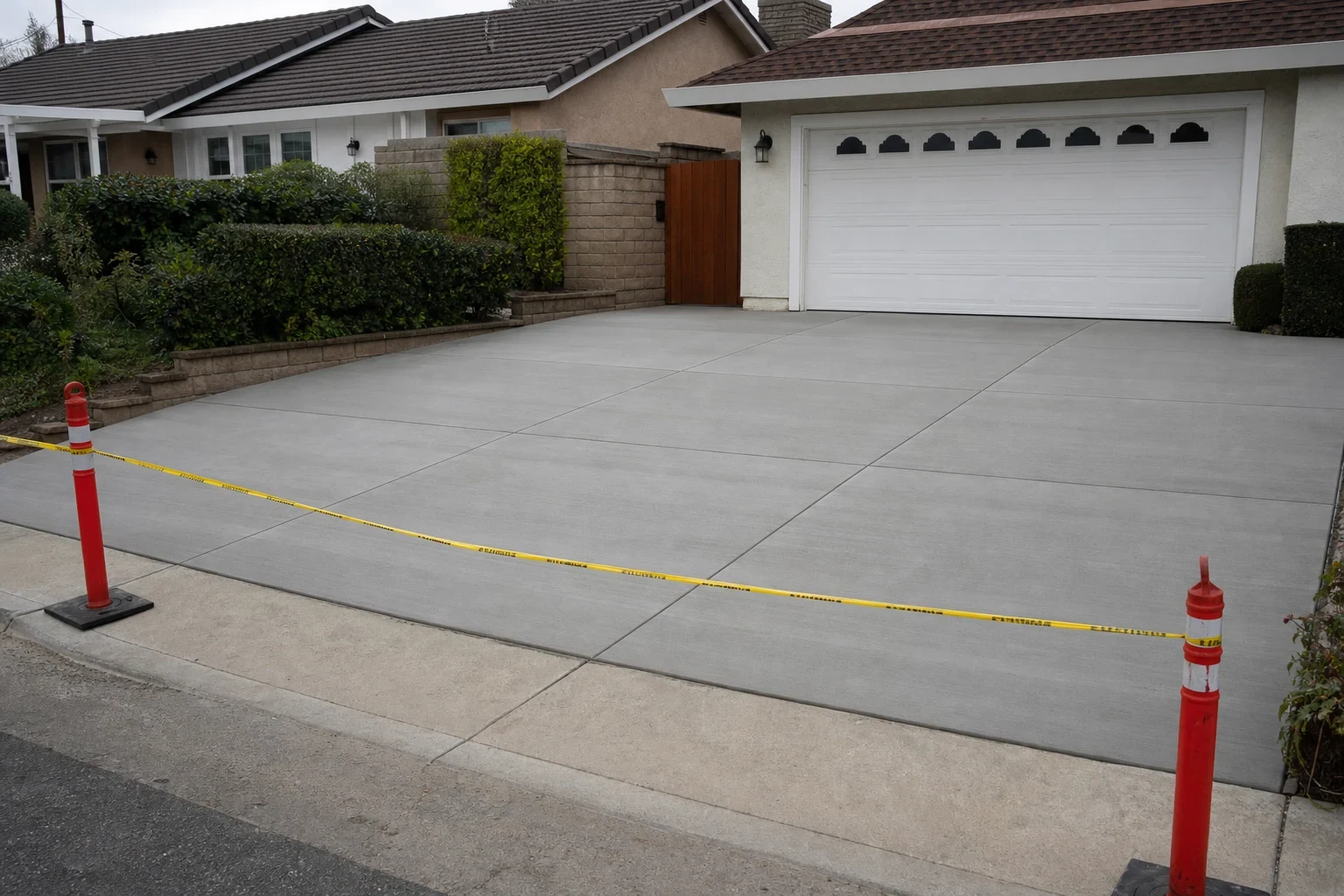
Tell us what you drive and where you want it parked. We'll come take a look and give you a written estimate.