ServicesSteps and Stairs
Concrete Steps and Stairs in Laguna Hills
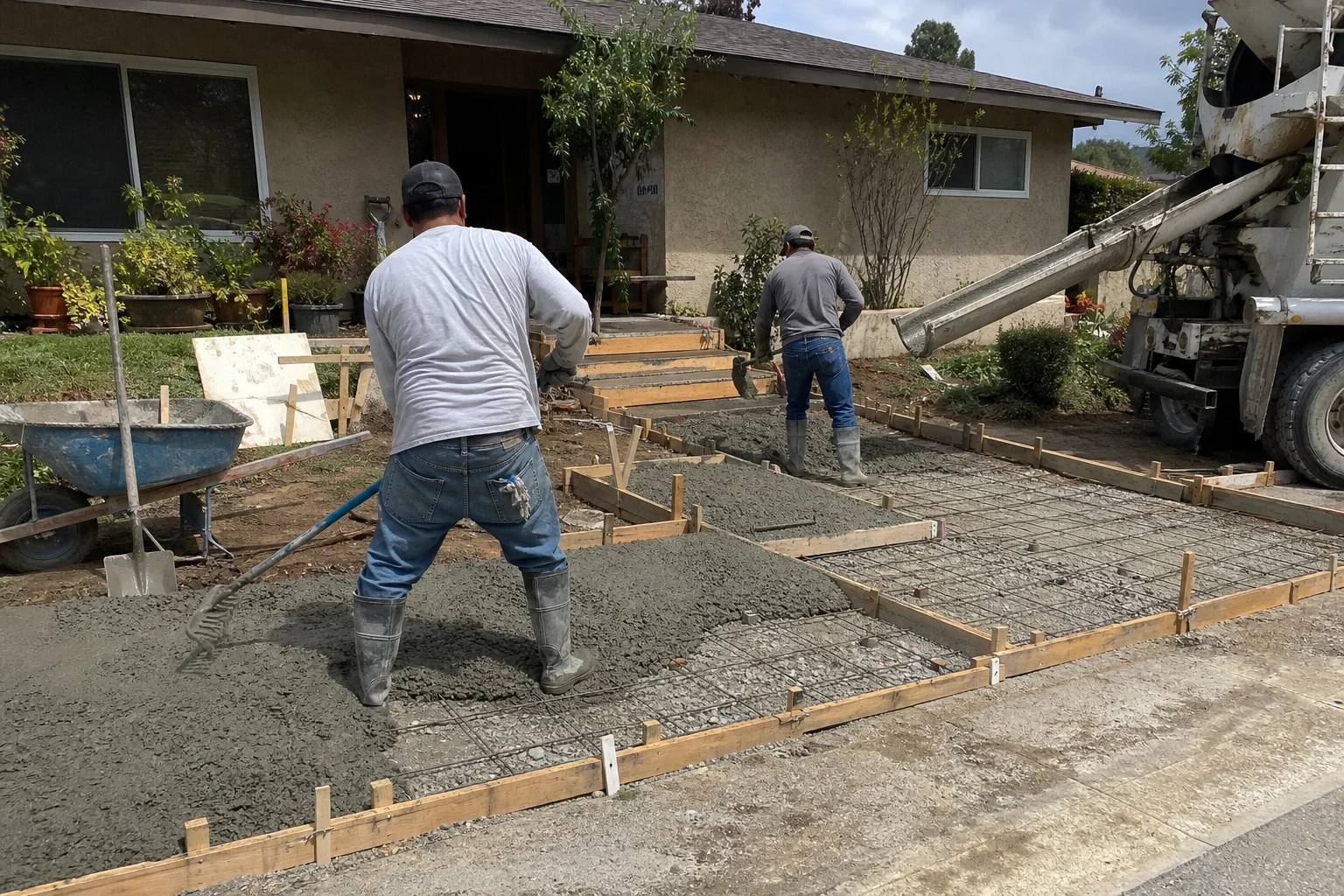
We tear out old steps and pour new ones that feel right underfoot. Every riser the same height, treads deep enough for a full foot, and a finish that grips when the sprinklers hit it. We build them the way we'd want them at our own front door.
New steps that are the right height every time
Most people trip on stairs because one step is a little off from the rest. Your foot learns the rhythm of the first two, then the third catches you. So the main thing we do on stairs is keep every riser the same and every tread level front to back, with just enough fall to shed water.
We build front entry steps, steps down to a patio or pool deck, and longer runs of stairs on sloped yards. Lots around Laguna Hills often have grade changes between the street, the house and the backyard, and a good set of concrete stairs is usually the safest way to connect them.
If the steps are part of a bigger project, like a new walkway or a stamped patio, we can pour them to match so the whole thing looks planned. Treating your place like a neighbor's means we tell you plainly what we'd build and why.
What goes into a set of steps
Demo and haul-off
We break out the old steps, load the debris and take it away. You don't end up with a pile of rubble by the side of the house.
Base and compaction
We dig to firm soil, bring in base rock and compact it. Clay soil in this area swells when wet and shrinks when dry, so the base matters more than most people think.
Steel tied to the house side
Rebar runs through the steps and gets doweled into the existing slab or foundation where it makes sense. That keeps the steps from pulling away from the door over time.
Forms set to the measurements
We lay out the run so the rise is split evenly across every step. Then we set the forms and check them before any concrete shows up.
Finish and edges
Treads get a broom finish for grip and rounded edges that won't chip as easily. We can also do a stamped or colored finish if you want them to match other work.
Cleanup
Forms come off after the concrete sets, the soil around the steps gets backfilled, and we sweep up before we leave.
Signs it's time for new steps
- One step feels different
- If guests catch a toe on the same step, the riser heights are probably uneven. That's built into the old steps and won't fix itself.
- Steps pulling away from the house
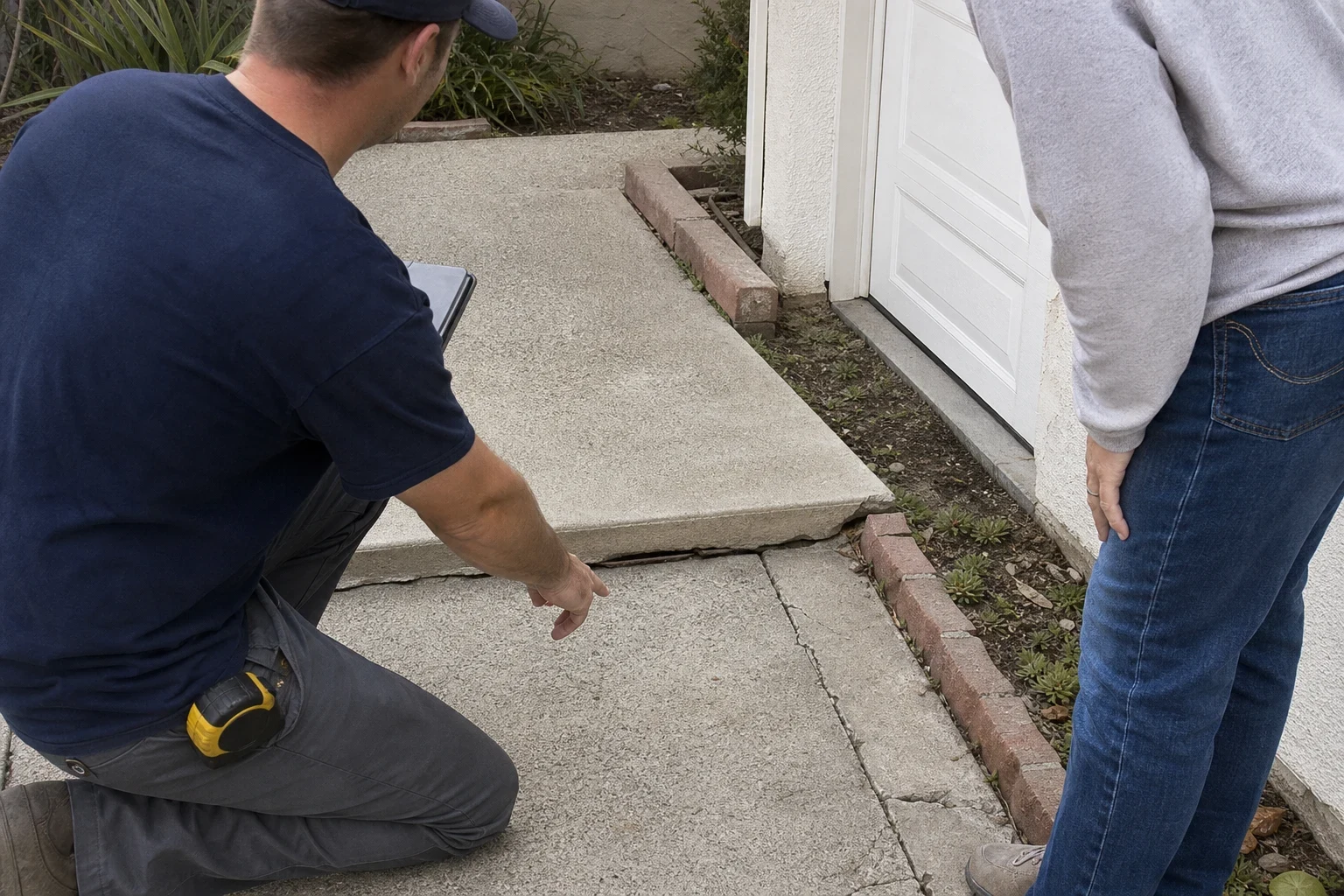
- A gap opening between the top step and the slab or threshold means the steps are settling on their own. Water gets into that gap and makes it worse.
- Tilting or rocking treads
- Treads that slope toward the house hold water against your foundation. Treads that lean out get slick and feel unsafe.
- Crumbling edges and exposed rock
- When the nosing breaks off and the surface turns sandy, the concrete is worn through. New steps are usually the cleaner answer.
- The landing is too small
- If you have to step back down to swing the door open, the landing is too shallow. A wider landing makes the entry safer, especially carrying groceries.
How the job goes
- 1
We come out and measure
We measure the total rise from ground to door, the run you have to work with, and look at the soil and drainage. Then we walk you through how many steps it takes and how deep the treads can be.
- 2
Demo and prep
Old steps come out, we dig and compact the base and set the steel. If a permit is needed for the job, we pull it before we start.
- 3
Forms and pour
We set the forms, double-check every riser, then pour and finish in one go. Most sets of steps are poured in a single day.
- 4
Curing and strip
Plan to stay off the new steps for a day or two. We strip the forms, backfill around the sides and clean up, and we'll show you another way in and out while it cures.
What sets the price
Steps are small jobs with a lot of hand work, so the cost comes mostly from labor and forming, not the amount of concrete. We go over each part on the phone and again after we measure, so you know what you're paying for.
- Number of steps and width
- More risers and wider stairs mean more forming, more steel and more finishing time.
- What comes out first
- Breaking out old concrete, brick or tile steps adds demo and haul-off. Thick old steps take longer to remove.
- Access and slope
- Stairs on a hillside or behind the house may need concrete wheeled or pumped in. Tight side access slows everything down.
- Finish and extras
- A plain broom finish costs less than stamped or colored concrete. Handrail mounts, side walls and a larger landing add to it.
- Permits
- Some stair jobs need a city permit and inspection. If yours does, that cost is part of the quote.
Questions about concrete steps
- Can you pour new steps right over my old ones?
- Usually not. Pouring on top raises the bottom step and shrinks the space under the door, and the new layer tends to crack where it meets the old. We break the old steps out and start from a solid base.
- How soon can we walk on them?
- Light foot traffic is usually fine after a day or two, depending on the weather. Concrete keeps gaining strength for weeks, so we ask you to keep heavy loads and furniture dollies off for a while longer.
- Do I need a handrail?
- A handrail is generally required once a stair has four or more risers, and it's a good idea on shorter runs if anyone in the house is unsteady. We can set the steps up so a rail mounts cleanly.
- How will we get in and out of the house during the job?
- We talk this through before we start. For front steps, most people use the garage or a side door for a day or two. If that entry is your only way in, we can plan a temporary step.
- Can the steps match my patio or walkway?
- Yes. We can pour them with the same broom finish, or color and stamp them to tie in with stamped concrete nearby. We'll be honest if an exact match to old concrete isn't possible.
Let's get your steps sorted out
Tell us how many steps you have and where they lead. We'll set a time to come measure and give you a straight answer on what to build.