ServicesPatios
Concrete Patios in Laguna Hills
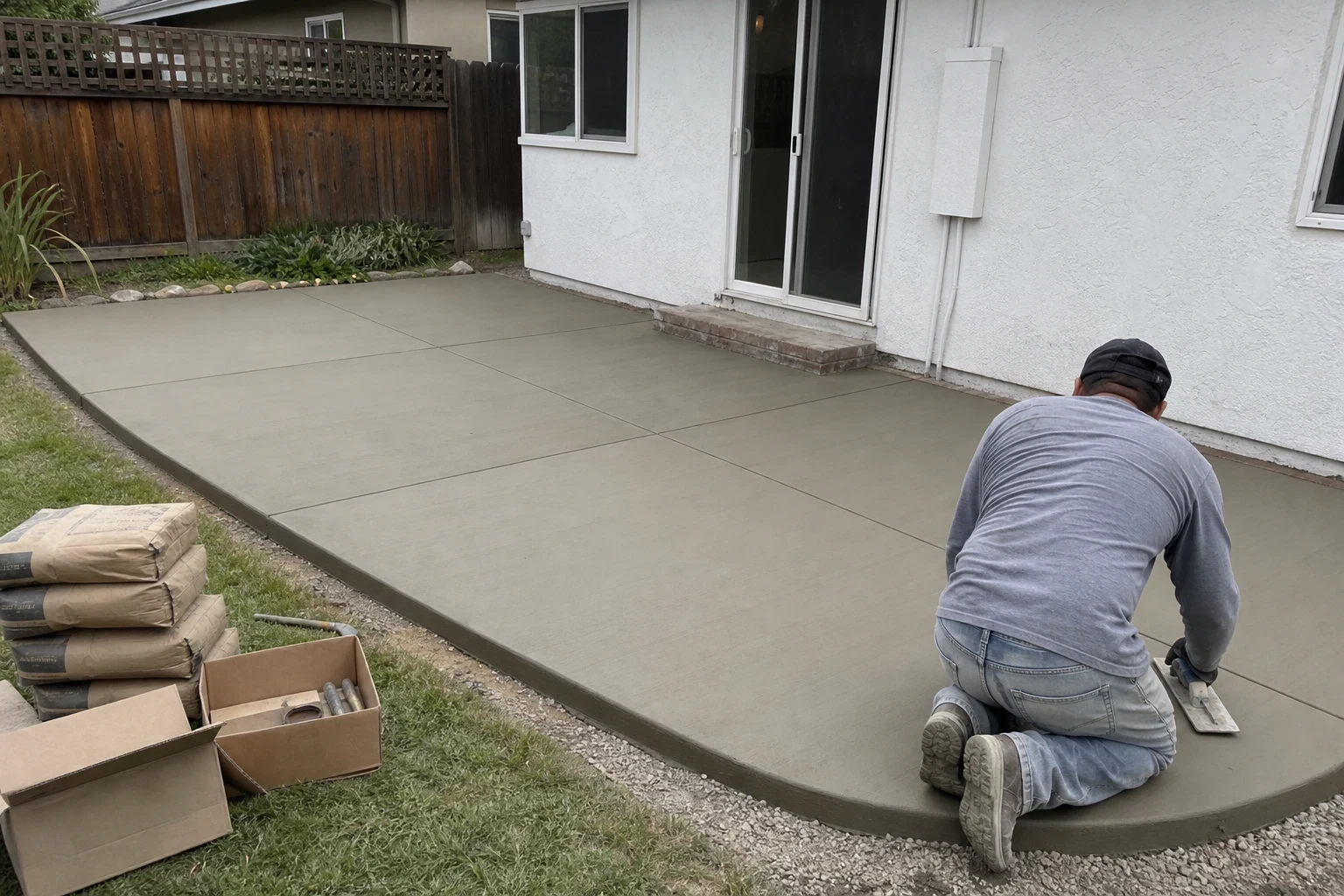
We build concrete patios that sit flat, drain away from the house and hold up to years of chairs, grills and foot traffic. We dig it out, set the base, place steel and finish the surface the way you want it. Then we clean up like it's our own yard.
A patio is mostly the work you never see
The top inch of a patio gets all the attention. What decides how it lasts is underneath: how deep we dig, how well the base is packed and whether there's steel in the slab. Skip those and you get cracks, low spots and puddles by the back door.
A new patio is the right call when you want usable outdoor space off the house, when an old slab has heaved or sunk past saving, or when pavers and dirt aren't working anymore. Much of the ground around here is clay that swells in winter rain and shrinks in summer, so we build the base with that in mind.
We keep it simple. You tell us how you use the yard, we tell you what will work and what it takes, and we show up when we said we would.
What your patio job includes
Layout that fits how you live
We mark the shape on the ground before anything gets dug. You can walk it, set a table on it and change your mind while it's still paint and string.
Excavation and haul-off
We dig out sod, roots and soft soil to the right depth. If there's an old slab, we break it out and haul it away.
Compacted base
We bring in gravel base and pack it in layers with a plate compactor. This is what keeps the slab from settling.
Steel and forms
Rebar or wire goes in on chairs so it sits in the middle of the slab, not on the dirt. Forms are set with a slight fall away from your home so water runs off.
Finish and control joints
Pick a broom finish, smooth trowel, exposed aggregate or a colored surface. We cut control joints so any shrinkage cracks land in a straight line instead of across the middle. For patterns and textures, see our stamped concrete page.
Cleanup
We wash down tools away from your plants, pick up form stakes and leave the yard raked out around the new edges.
Signs it's time for a new patio
Water pools by the house
If rain sits against your wall or runs toward the slider, the slab is sloped wrong or has sunk. That water can find its way under the house.
Slabs have tilted or heaved
Pieces that rock, lift or drop at the joints are a trip hazard. Usually the base under them has failed, and the fix is a new pour.
Wide cracks keep growing
Hairline cracks are normal in concrete. Cracks you can fit a coin in, or ones with one side higher than the other, mean the slab has moved.
The space is too small to use
A little landing outside the back door doesn't fit a table and chairs. Extending it or starting over gives you a real outdoor room.
Pavers or dirt are a constant chore
Weeds in the joints, sunken pavers and dust tracked inside. A solid slab puts an end to that.
How the job goes
- 1
We talk it over and come look
Start with a phone call. We set a time to see the yard, check the grade and drainage, and measure. You get a clear written price with the line items spelled out.
- 2
Dig out and prep the base
Day one is usually digging, hauling and packing the base. If a permit is needed for your project, we take care of pulling it.
- 3
Forms and steel
We set forms, check the slope with a level and place the steel. You get a look before we pour so you know what you're getting.
- 4
Pour and finish
The truck comes, we place the concrete, then screed, float and finish it to your choice of surface. Joints get cut while the concrete is still green.
- 5
Cure and walk-through
Forms come off after a day or two. We walk the patio with you, go over curing and care, and leave the yard clean.
What moves the price of a patio
Every patio is priced on its own. Two yards of the same size can cost different amounts because of access or what's already there. We'll explain each line on your quote so nothing comes as a surprise.
- Size and shape
- More square feet means more concrete, base and labor. Curves and lots of corners take more forming time than a plain rectangle.
- Access to the backyard
- If the truck can't reach the back, we pump the concrete or wheel it in. A narrow side yard or a gate in the way adds time.
- What's there now
- Breaking out and hauling an old slab, pavers or deep roots adds work. So does soft or clay soil that needs extra base.
- Finish choice
- A broom finish is the simplest. Color, exposed aggregate and stamped patterns take more material and more hands on pour day.
- Thickness and steel
- A patio that will hold a heavy grill island, a fire pit or a future cover needs thicker sections and more steel in those spots.
Patio questions we hear a lot
Something not covered here? (949) 386-2816
How soon can I use my new patio?
You can walk on it after about a day. Wait about a week before setting heavy furniture or a grill on it. Concrete keeps gaining strength for about a month, so go easy on it until then.
How thick should a patio slab be?
Four inches is standard for a patio that gets foot traffic and furniture. We go thicker under things like a built-in grill, a fire pit or posts for a future cover. We'll talk about what you plan to put out there before we set the forms.
Can you pour a new patio over my old one?
Sometimes, but not often. If the old slab has moved, the new one will crack right along with it, and the extra height can block doors or drainage. Most of the time we break it out and start with a fresh base.
Will my patio crack?
Concrete shrinks as it cures, so small cracks can happen. Good base prep, steel and properly spaced control joints keep cracks small and in the joints where you won't notice them. Wide, shifting cracks are what we build to prevent.
Do I need a permit for a patio?
A plain slab at ground level often doesn't need one, but it depends on the size, the drainage and whether a cover or wall is part of the plan. We check the rules for your address and pull the permit if it's required.
Should I seal my patio?
Sealing helps keep out grill grease, pool water and stains, and it brings out color on decorative finishes. We'll tell you when the slab is ready for it and how often to reapply.
Ready for a patio you'll actually use?
Tell us about your yard and how you want to use it. We'll come out, take a look and give you a straight answer on what it takes.