ServicesConcrete Backyards
Concrete Backyards in Laguna Hills
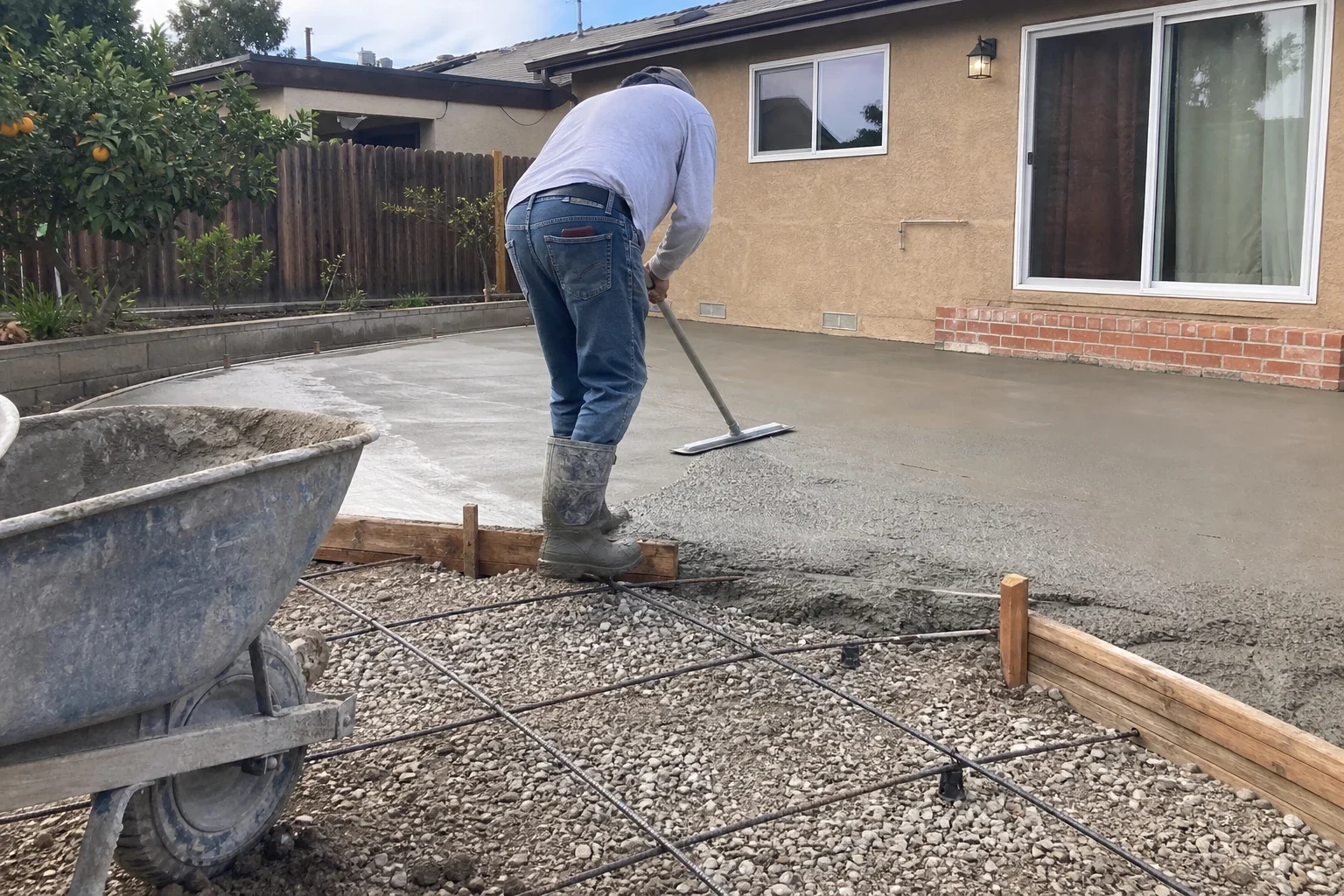
We turn a tired lawn or patchy dirt yard into a backyard you can use every day. The patio, paths and open areas get planned as one layout, graded to drain away from your home and poured so the pieces match.
One Plan for the Whole Yard
A concrete backyard is more than a patio. It covers most of the yard: a sitting area off the back door, a path to the side gate, room for a table or a grill, and maybe a strip left open for planters or turf. We lay it out as one job so the slopes, joints and finish line up.
It makes sense when the grass is costing you water and weekends, when the yard turns to mud every winter, or when you just want space the kids and the dog can use without tracking dirt inside. Most yards in the area sit on clay soil that swells when wet and shrinks when dry. That is why we put so much of our time into what goes under the concrete.
We work the way we would want a neighbor to work in our own yard. We show up when we said we would, keep the mess on our side of the fence and tell you straight what the job needs.
What the Work Includes
Layout you can see
We mark the shapes on the ground with paint and string before we dig. You can walk it, set a chair down and change your mind while it is still cheap to change.
Removal and haul-off
Grass, roots, old pavers or broken slabs come out and leave on our trucks. You do not end up with a dirt pile on the side of the house.
Grading and drainage
We set the slope so water runs away from your home and toward the street, a drain or a planter. Where the yard needs it, we add drain lines or channel drains before the pour.
Base and reinforcement
A compacted gravel base goes down first, then rebar or wire mesh. On expansive clay this is what keeps the slab from heaving and cracking a year later.
Finish and control joints
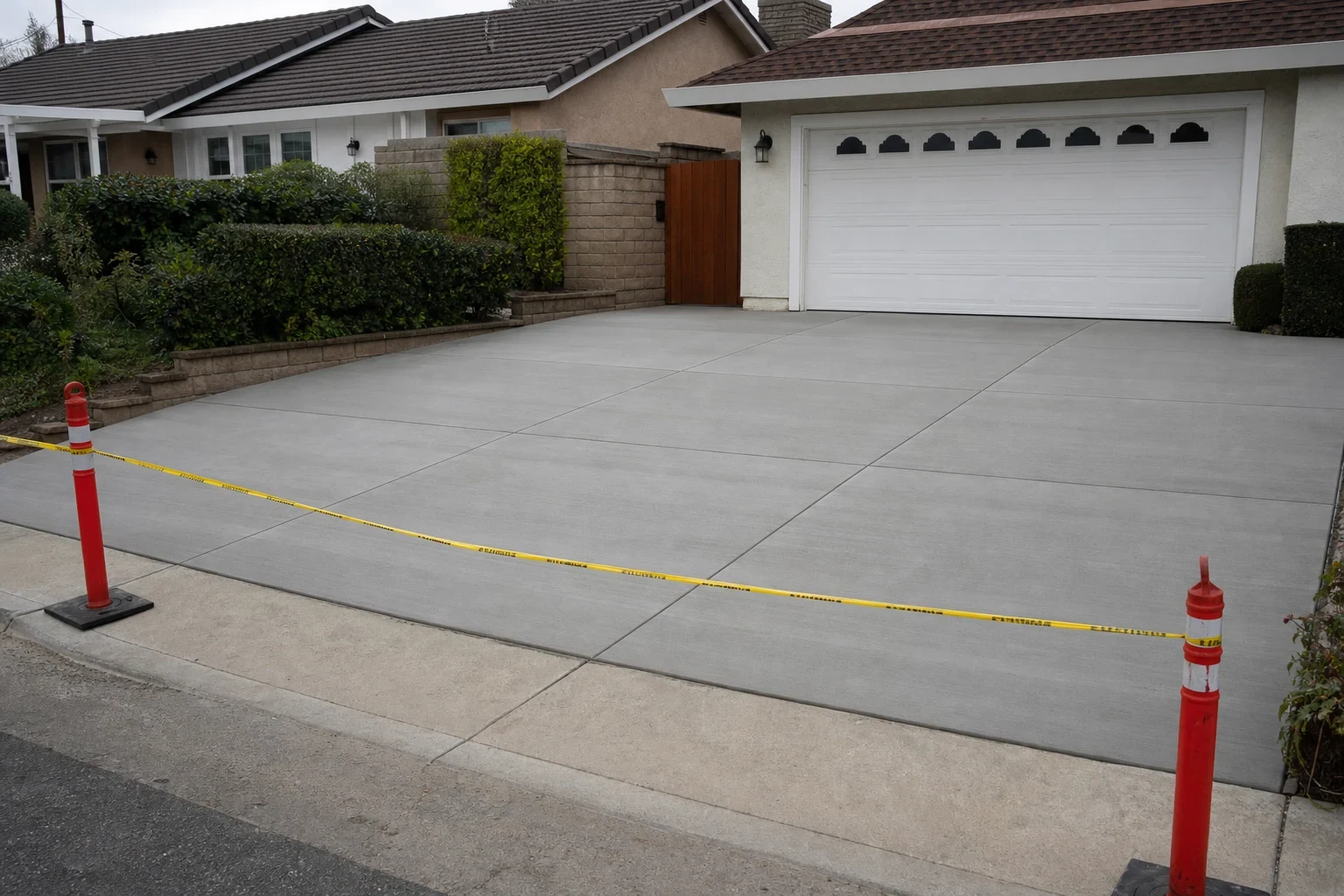
Pick a broom finish, a smooth trowel edge, exposed aggregate or stamped concrete. We cut control joints on a planned grid so any shrinkage cracks follow a straight line instead of wandering across the yard.
Cleanup and walkthrough
We wash down the hardscape, pick up forms and stakes and walk the yard with you. You get clear instructions on when to walk, drive or set furniture on it.
Signs Your Backyard Is Ready for Concrete
- Mud every rainy season
- If the yard is a swamp for weeks each winter, it needs grading and a hard surface. Concrete with the right slope moves that water out.
- Water standing by the house
- Puddles against the foundation are a problem you do not want to sit on. A properly sloped backyard pushes water away from your home.
- Lawn that costs more than it gives
- Brown patches, a big water bill and a mower in the garage for a yard nobody sits in. Many people would rather have usable space and a few planters.
- Old pavers or a cracked slab
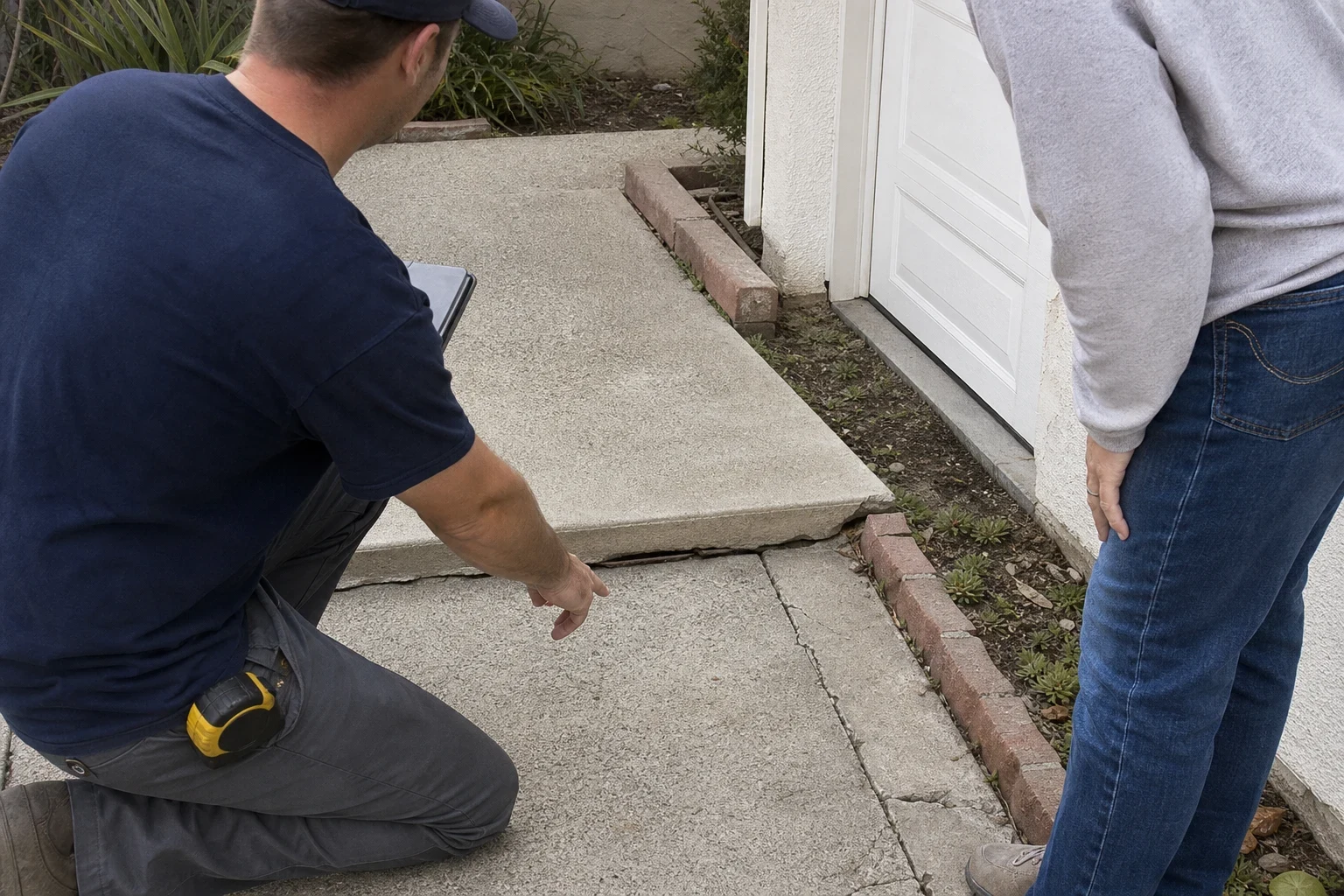
- Sunken pavers and broken patio slabs trip people and grow weeds. Tearing them out and starting fresh with one layout often beats patching pieces.
- No place to sit or gather
- If you keep saying you would eat outside more if there were room for a table, that is a sign. A good backyard plan gives you that room.
How the Job Runs
- 1
Phone call and site visit
You tell us what you want to use the yard for. We come out, measure, check the slope and the soil, and look at access through the side yard.
- 2
Written estimate
You get a line-by-line estimate covering demo, base, concrete, finish and drainage. If your HOA needs to approve the plan, we give you the drawing and specs to send in.
- 3
Demo and prep day
We cover nearby walls and plants, remove what is there, grade, compact the base and set forms and steel. Before any concrete arrives, you walk the forms with us and sign off on the shapes.
- 4
Pour and finish
Concrete goes in, gets leveled and gets its finish while it is still workable. Hot, dry summer days mean we start early and keep the surface damp so it cures slowly and stays strong.
- 5
Cure and handoff
Joints get cut, forms come off and we clean up. Foot traffic is usually fine after a day or two, and heavy furniture or a grill can wait about a week.
What Moves the Price
Every backyard is different, so we price it after we see it. The square footage matters, but so does what is hiding under the grass and how hard it is to get material back there. Your estimate spells out each of these so nothing shows up later as a surprise.
- Size and shape
- More area means more concrete and labor. Curves and lots of small sections take longer to form than one big rectangle.
- Access to the yard
- A wide side gate lets us pump or wheel concrete straight in. A narrow side yard or a slope may mean a concrete pump or more hand work.
- Demo and soil prep
- Pulling out an old slab costs more than stripping turf. Soft or heavy clay soil can need extra base and compaction.
- Drainage work
- Drain lines, channel drains and tie-ins to the street add material and time, but they protect the whole investment.
- Finish choice
- A broom finish is the simplest. Color, exposed aggregate and stamped patterns add steps and labor.
Backyard Concrete Questions
- Do I need a permit for a concrete backyard?
- Plain flatwork in a backyard often does not need one, but it depends on the city, the drainage and whether any walls or structures are part of the job. We check the rules for your address during the estimate. If a permit is needed, we pull it and handle the inspection.
- Will the concrete crack?
- All concrete shrinks a little as it cures, and some hairline cracks are normal. What we control is where they go. A good base, steel and control joints on a planned grid keep cracks in the joints and keep the slab from shifting on clay soil.
- Can I keep some grass or planters?
- Yes, and a lot of people do. We can leave planting beds, a strip of turf or space for trees. Planning those openings up front is much easier than cutting them in later.
- How long will my yard be torn up?
- A typical backyard runs a few days from demo to pour, depending on size and access. Then the concrete needs time to cure before heavy use. We give you a day-by-day plan at the estimate so you know when we will be there and when the yard is yours again.
- Can the backyard match my patio or pool deck?
- We can match color and finish closely, though new concrete always looks a little different from old concrete at first. If you are also planning a patio or concrete pool deck, it is best to do them as one project so everything matches from day one.
Let's Walk Your Yard Together
Tell us how you want to use the space and we will come out, look at the slope and the soil, and give you a clear plan with a written estimate.