ServicesConcrete Slabs
Concrete Slabs in Laguna Hills
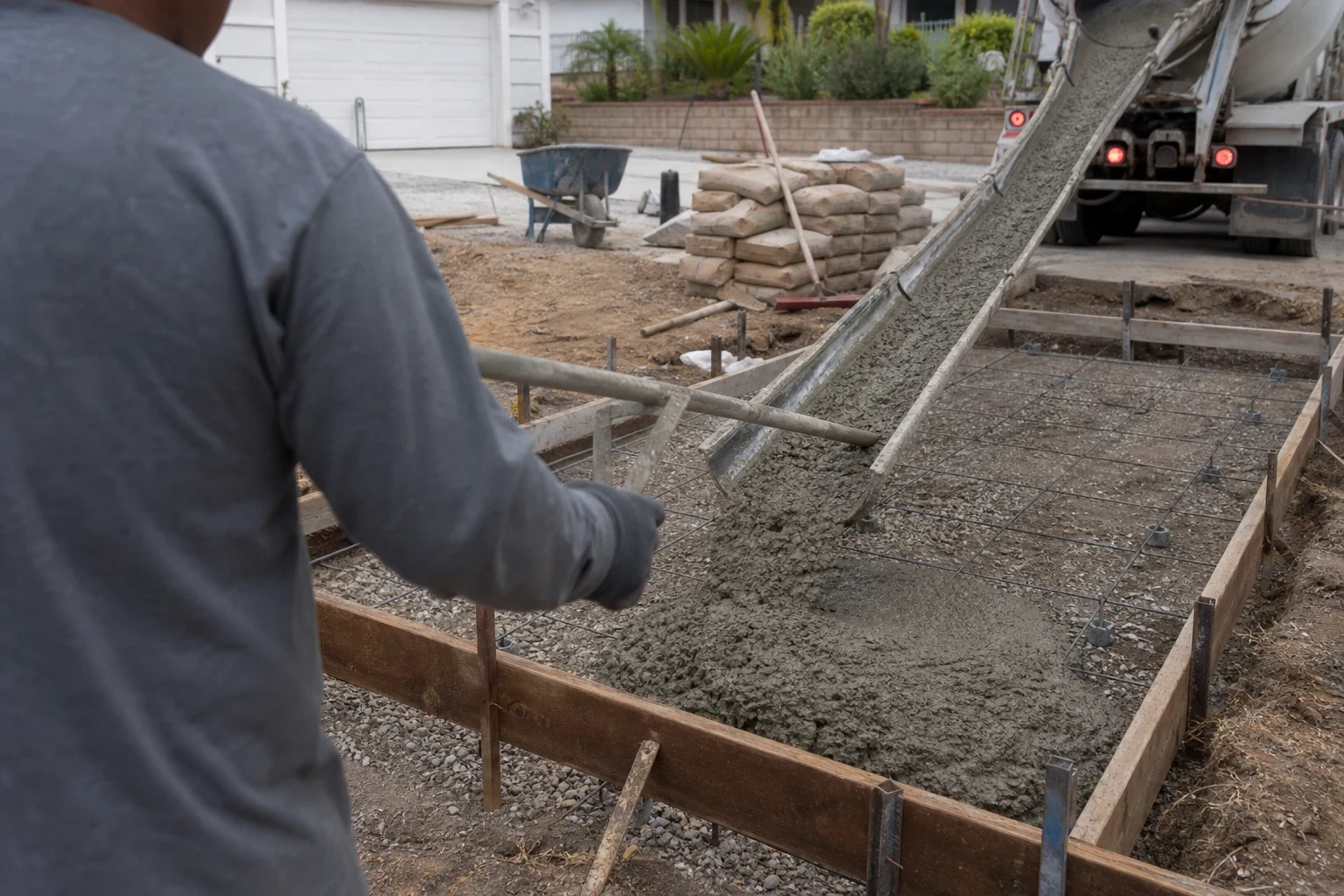
We pour concrete slabs for sheds, hot tubs, AC units, workshops and open yard space. We dig to firm soil, build a compacted base, set the steel and forms, and finish the slab flat so whatever sits on it stays put.
A slab is only as good as what's under it
A slab looks simple. It's a flat piece of concrete. But most slab problems start below the surface, with soft fill, poor compaction or no steel inside. Much of the ground around Laguna Hills is clay that swells when wet and shrinks when dry, so the base work matters more than the finish.
We work in your yard the way we'd want someone working in ours. We show you where the forms will go before we dig. We keep wheelbarrows off your lawn where we can, and we leave the area swept when we're done. You'll know the thickness, the steel and the schedule before any concrete shows up.
If the slab will hold a car or a trailer, our Concrete RV Parking Pads and Driveways pages cover that work. For a space you'll sit and entertain on, see Patios.
What goes into a slab we pour
Layout and drainage check
We stake the outline and look at how water moves across the spot. The slab gets a slight slope so rain runs away from your home and off the pad.
Excavation and compacted base
We dig out sod, roots and loose soil, then lay crushed rock and compact it in layers. On clay we go a bit deeper so the base can carry the load.
Forms and steel
Forms set clean, straight edges. Rebar or wire mesh sits up on small supports so it ends up in the middle of the slab, not lying in the dirt where it does nothing.
Thickness sized to the load
A shed pad and a hot tub pad are not the same slab. We size thickness and steel to what will sit on it, including the full weight of a filled spa.
Finish and control joints
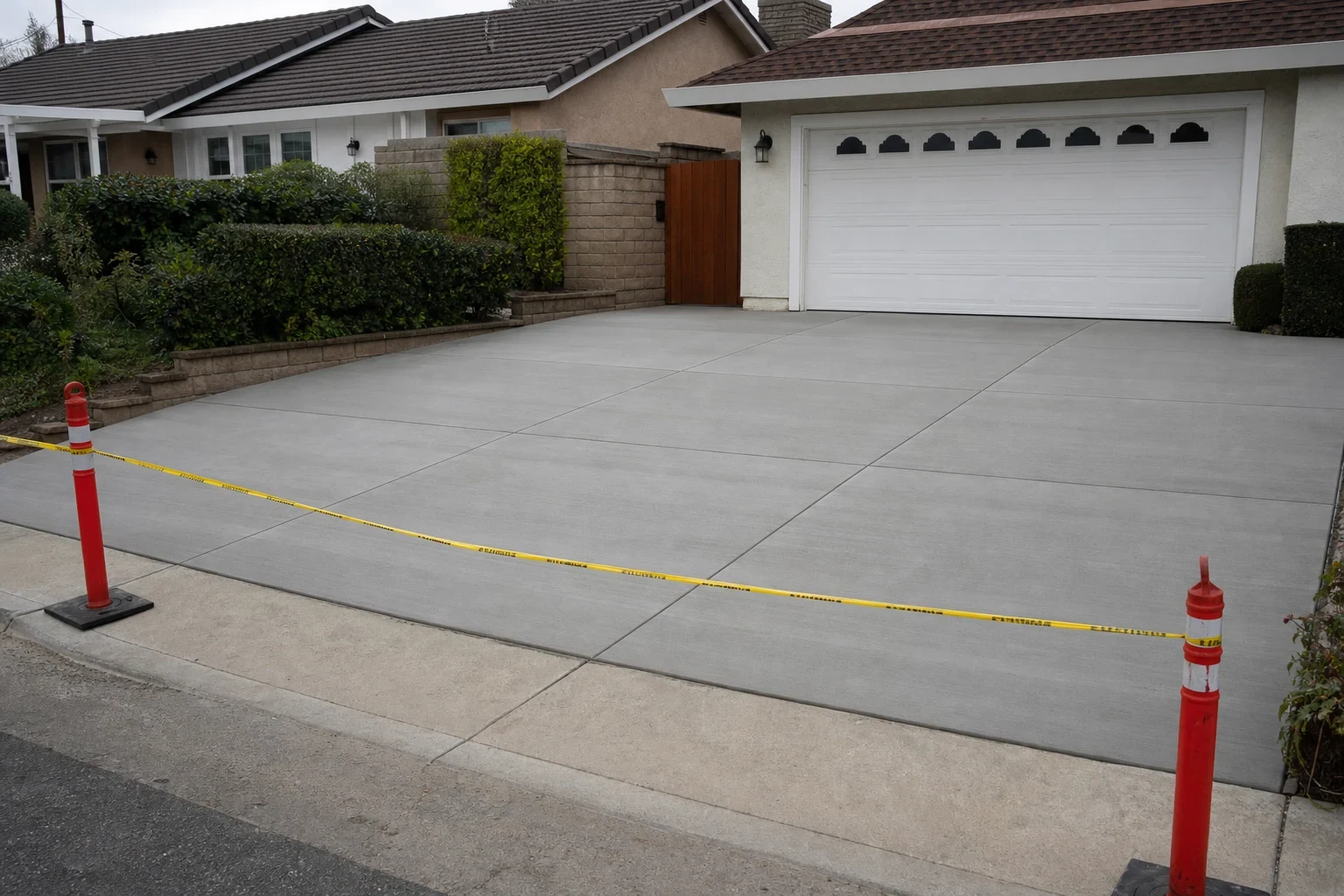
Broom finish outdoors for grip, or a smooth trowel finish under a shed or workshop. We cut control joints so any shrinkage cracks follow straight lines we chose.
Curing and cleanup
We keep the fresh slab covered or damp so it cures slowly and gains strength. Then we haul off the dirt and debris and rinse down the work area.
Signs it's time for a new slab
The old pad has sunk or tipped
If the shed door drags or the hot tub sits crooked, the pad underneath likely settled. We break it out, rebuild the base and pour new.
Water runs toward your home
A slab sloped the wrong way sends rain at your foundation every storm. A new pour lets us set the right fall.
You're adding something heavy
A hot tub, generator or workshop needs a flat, solid base. Pavers and gravel shift under that kind of weight over time.
Bare dirt that won't behave
That patch beside the garage turns to mud in winter and dust in summer. A slab gives you a clean surface you can actually use.
Heaved, broken sections
When pieces have lifted and split apart, the base under them has failed. A new slab on a rebuilt base is what lasts.
How a slab job goes
- 1
We walk the site with you
We measure, check the soil and how we'll get concrete to the spot, and ask what the slab is for. Then you get a written estimate with each part of the work listed.
- 2
Permit and prep
If the city requires a permit for your slab, we pull it. On prep day we excavate, compact the base, set the forms and place the steel.
- 3
Pour day
The truck pulls up, or we bring in a pump if the yard is hard to reach. We place, level and finish the concrete in one go while it's workable.
- 4
Cure and hand-off
Forms come off after a day or two. You can walk on it after about a day and set light things on it in a week, while heavy loads like a filled spa wait closer to a month. We go over care with you before we leave.
What sets the price of a slab
Every slab is priced on its own site. Size is the start, but access and soil often matter just as much. We list each item on the estimate so you can see where the money goes.
- Size and thickness
- More square feet and a thicker slab mean more concrete, more base rock and more steel. A heavy-load pad costs more per foot than a light one.
- Getting concrete to the spot
- An open front yard is easy. A pad behind the house, up a slope or down a narrow side yard may need a pump or wheelbarrows, which adds labor.
- Removal and soil work
- Breaking out an old slab, hauling it off, or digging deeper in clay all add time and dump fees.
- Finish and extras
- Broom finish is the baseline. Smooth trowel, color or a pattern costs more. Our Stamped Concrete page covers the decorative side.
- Permits
- When a permit and inspection are required, the fees and the wait for the inspector become part of the job.
Concrete slab questions
Something not covered here? (949) 386-2816
How thick should my slab be?
Most pads for sheds, AC units and foot traffic are 4 inches. Hot tubs, workshops with heavy tools and anything you drive on usually get 5 to 6 inches with more steel. We'll recommend a thickness once we know what's going on it.
Do I need a permit for a slab?
Sometimes. It depends on the size, what the slab supports and where it sits on your lot. We check the city's rules for your project and pull the permit when one is needed.
Will my new slab crack?
Concrete shrinks as it cures, so fine hairline cracks can show up. A compacted base, steel and control joints keep those cracks in the joints and stop them from spreading or opening wide. We'll show you where the joints go before we pour.
Can you pour where an old slab is now?
Yes. We break out the old concrete, haul it away, check the soil under it and rebuild the base before the new pour. The base is usually where the old slab went wrong.
Will the concrete truck damage my yard or driveway?
We plan the truck's path before pour day. If it can't get close without risk, we pump the concrete or run it in by wheelbarrow over boards. We tell you up front about anything that could be affected.
Planning a slab for your yard?
Tell us what's going on it and where. We'll come look at the spot and walk you through the thickness, the base and the cost.