ServicesSide Yards
Concrete Side Yards in Laguna Hills
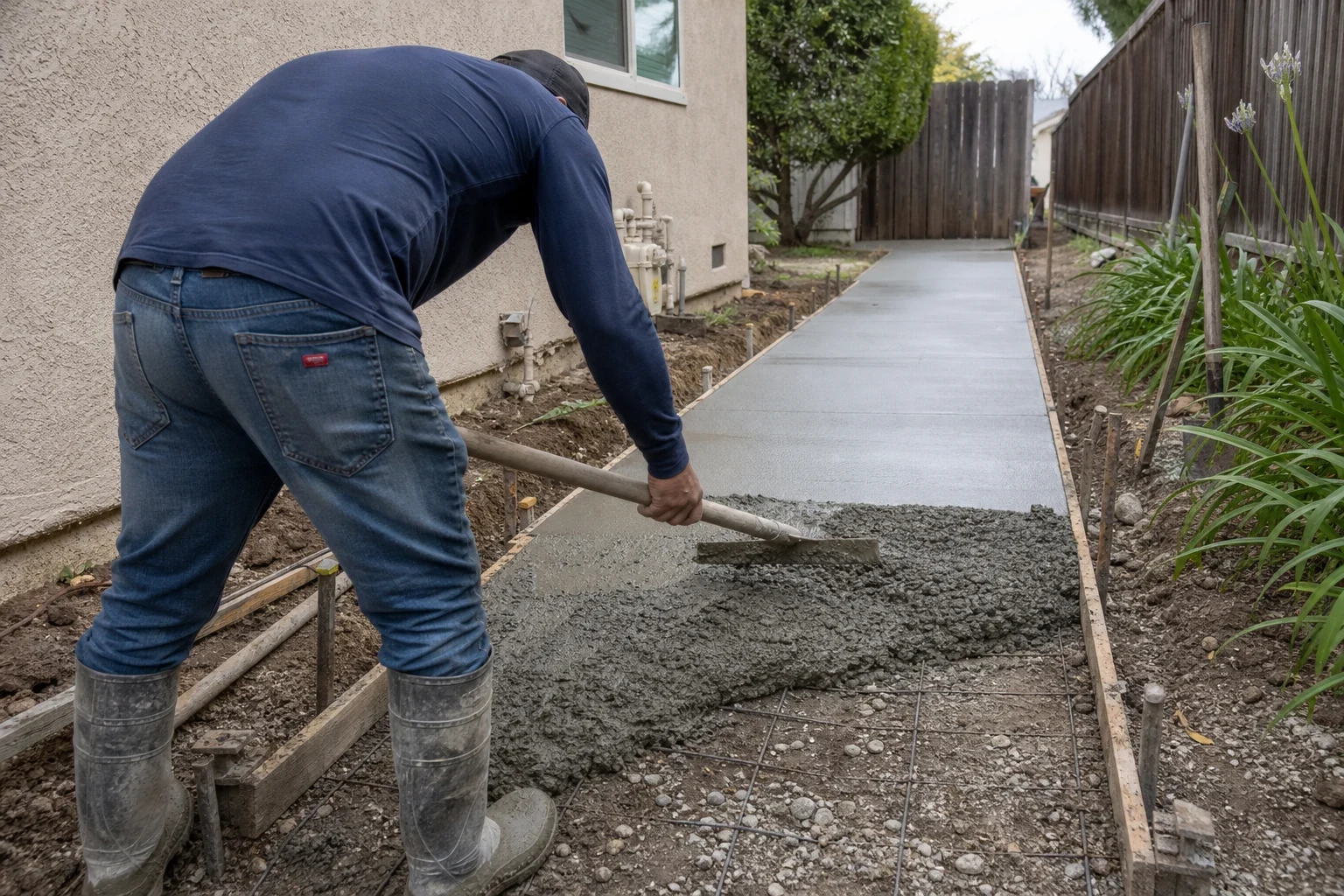
That narrow strip beside your house takes a beating. We pour side yards that shed water away from the foundation, sit at the right height against the stucco, and give you a clean, level path from the front gate to the backyard.
A side yard that works instead of one you avoid
Most side yards start as dirt, gravel or a few sunken pavers. They hold puddles after a storm, grow weeds, and track mud into the garage. A concrete side yard fixes that with one flat surface that's easy to sweep and easy to roll a bin across.
The hard part isn't the pour. It's the slope, the height against your house, and the tight access. Water has to run away from the foundation and out toward the street or a drain. The slab has to stay low enough that it doesn't cover the weep screed at the bottom of the stucco. We plan both before any forms go in.
We work on side yards the way we'd want a neighbor to work on ours. We keep the gate closed so the dog stays in, protect the walls and plants we're working next to, and leave the yard swept when we pack up.
What the job includes
Clearing the old surface
We dig out gravel, loose pavers, weeds and old concrete, then haul it away. You won't be left with a pile by the curb.
Grading for drainage
We set the slope so water moves away from the house and toward the front, the back, or a drain inlet. On a long, flat run we may suggest a channel drain.
Compacted base
We lay and compact a base under the slab. A firm base matters here because many yards in this area sit on clay soil that swells when wet and shrinks when dry.
Working around fixtures
Gas meters, AC pads, hose bibs and cleanouts are common in side yards. We form around them neatly and keep access open so the utility company and your plumber can still reach them.
Reinforcement and joints
We add reinforcement and cut control joints at close spacing. In a narrow strip, joints give cracks a straight place to go instead of a random one.
Finish of your choice
A broom finish gives good grip and is the usual pick. If you want it to match a patio or entry, we can do stamped concrete in the side yard too.
Signs your side yard is ready for concrete
Water pools against the house
If rain sits along the wall or soaks the soil next to the foundation, the grade is wrong. Concrete with a proper slope moves that water out.
Mud on everything
Muddy shoes, muddy bin wheels, muddy dog. A hard surface ends it.
Pavers that rock or sink
Pavers on a thin sand bed settle unevenly in a side yard. Once they tip, they become a tripping spot.
Weeds you pull every spring
Gravel and dirt grow weeds no matter how often you spray. A slab takes that chore off your list.
Soil piled up on the stucco
When dirt or old mulch climbs above the weep screed, moisture can wick into the wall. Lowering the grade and pouring at the right height fixes the problem at its source.
How a side yard job runs
- 1
Walk the yard with you
We measure the run, check where water goes now, and note meters, vents and the gate. We'll tell you plainly what the yard needs and what it doesn't.
- 2
Dig, grade and set forms
We remove the old surface, cut the grade down where it's too high, and compact the base. Forms go in with the slope already set, so you can see the fall before we pour.
- 3
Pour day
Trucks rarely fit in a side yard, so we often run concrete in by pump or by wheelbarrow from the street. We place it, finish it, and cut the joints that same day.
- 4
Cure and clean up
We pull the forms, wash down any splatter on the walls, and sweep. You can usually walk on it the next day, and we'll tell you when it's ready for bins and wheels.
What sets the price of a side yard
Side yards look small, but access and drainage drive a lot of the cost. We give you the number by phone and walk you through each line once we've seen the yard. If something under the old surface changes the plan, we show you and talk it over before doing more.
- Length and width
- More square footage means more concrete, base and labor. A long, narrow run also needs more forming and more joints.
- How we get concrete in
- A clear path from the street keeps it simple. Tight gates, steps or a long carry may mean a pump.
- Removal and soil export
- Old concrete, pavers or extra soil all have to be dug out and hauled. Lowering a grade that's too high adds dirt to remove.
- Drainage work
- A simple slope costs less than adding drain inlets or a channel drain tied to an existing line.
- Finish
- Broom finish is the plain choice. Stamped patterns or color add time and material.
Side yard questions we hear
Something not covered here? (949) 386-2816
How do you keep water from running toward my house?
We set the slope in the forms before the pour, falling away from the foundation. Where the yard is long and flat, we may add a drain inlet or channel drain. We'll show you where the water will go before we pour.
Can you pour around my AC unit and gas meter?
Yes. We form neatly around them and leave the clearance they need. Nothing gets buried, and service access stays open.
Will the concrete crack?
Concrete can crack, and anyone who says it never will isn't being straight with you. We reduce it with a compacted base, reinforcement and close joint spacing, so if a crack forms it usually follows a joint.
My side yard is only a few feet wide. Can you still get concrete back there?
Usually, yes. We often pump concrete through a hose from the street or move it by wheelbarrow. We'll check the gate width and path during the walk-through.
Do I need a permit?
Plain flatwork in a side yard often doesn't, but drainage changes or local rules can change that. We check with the city for your job and pull the permit when one is needed.
How long until I can use it?
Foot traffic is usually fine the next day. Rolling bins and heavier loads should wait several days. We'll give you the timing for your pour.
Ready to fix that side yard
Tell us how wide it is, how long it runs, and where the water goes when it rains. We'll set a time to come look and talk you through the plan.